


Analyze the expert content
Reviewed SME-developed clinical and public-health material to identify the central performance goal, essential concepts, and points where learners needed to make sense of evidence.
From idea to experience
Case study 01 / Digital learning
Transforming complex antimicrobial-resistance content into structured learning experiences that help healthcare professionals understand evidence, reason through realistic situations, and connect knowledge to action.
The challenge
Clinical and public-health source material is often dense, specialized, and organized around what experts need to explain. Working professionals need a different experience: a clear path through the content, meaningful context, and opportunities to interpret evidence and make decisions.
The design challenge was to preserve the integrity of SME-developed guidance while turning it into learning that was paced, navigable, visually coherent, and connected to real clinical and community settings.
The design response
Reviewed SME-developed clinical and public-health material to identify the central performance goal, essential concepts, and points where learners needed to make sense of evidence.
Organized dense material into a deliberate progression: establish context, introduce the case, reveal evidence, support a decision, explain the reasoning, and reinforce transfer.
Used visual hierarchy, diagrams, comparisons, animation, and progressive disclosure to reduce cognitive load and direct attention to the information that mattered at each moment.
Connected technical guidance to clinical vignettes, essential questions, decision points, knowledge checks, and practical takeaways for working professionals.
Inside the experience
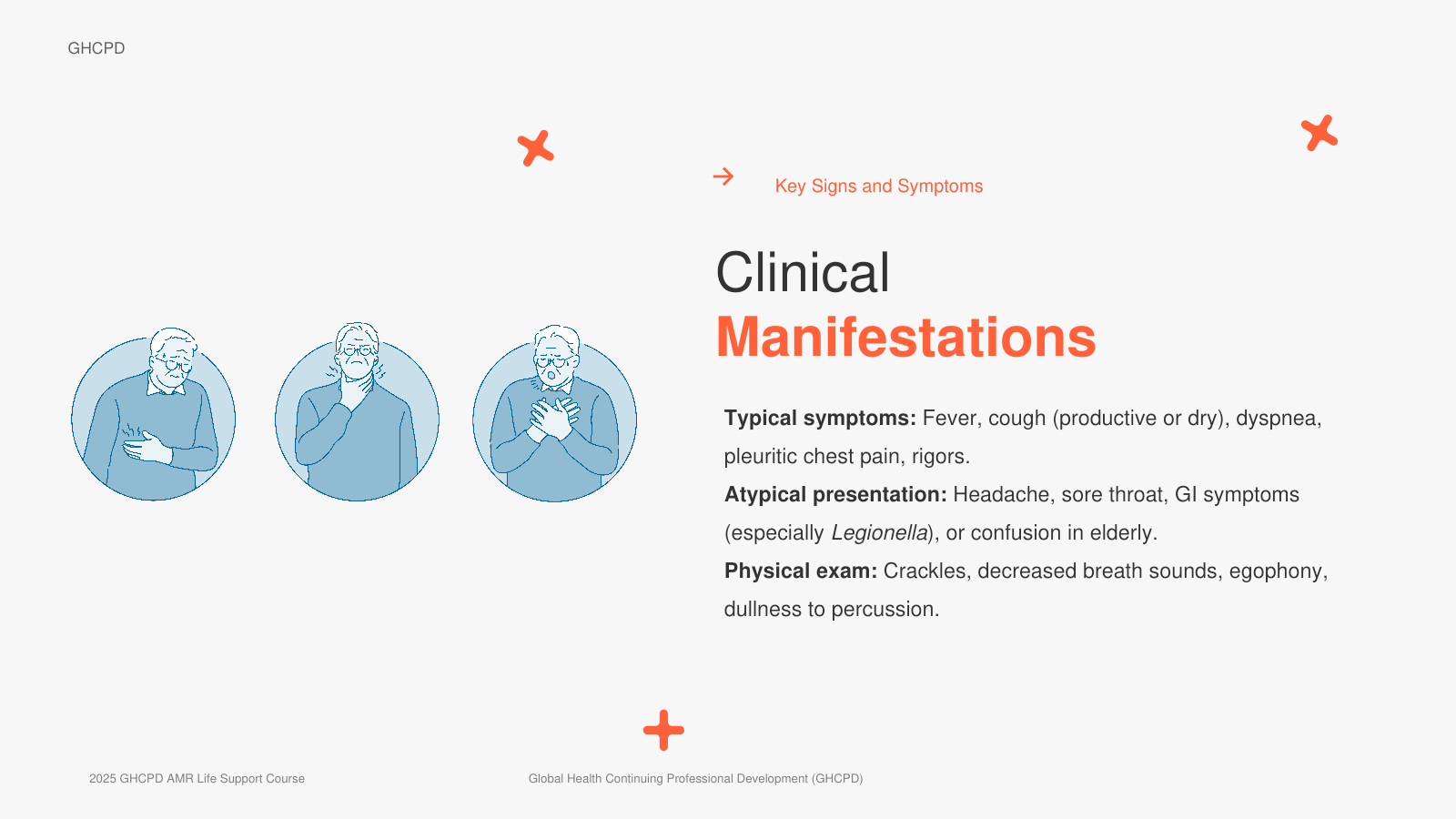
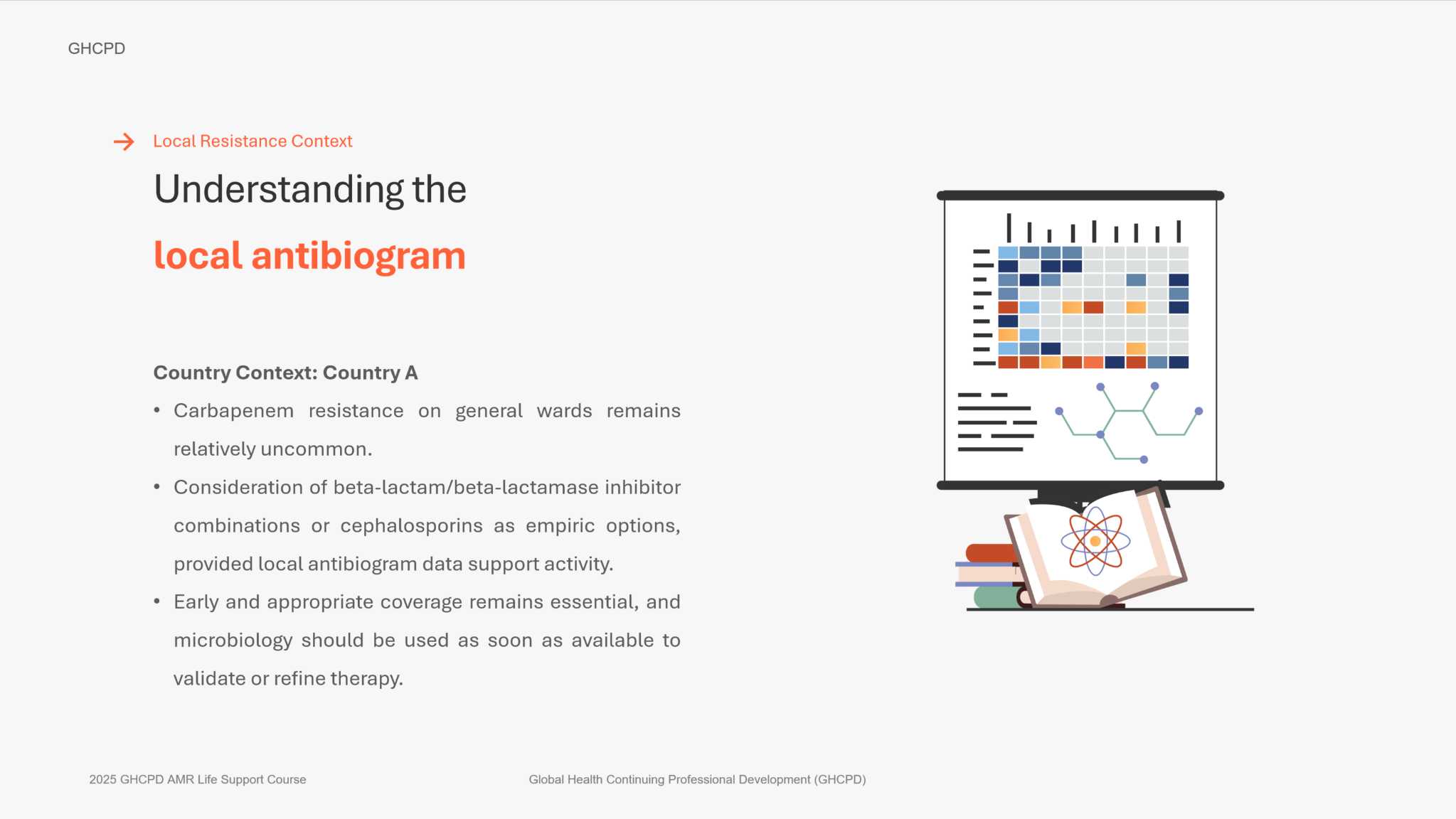
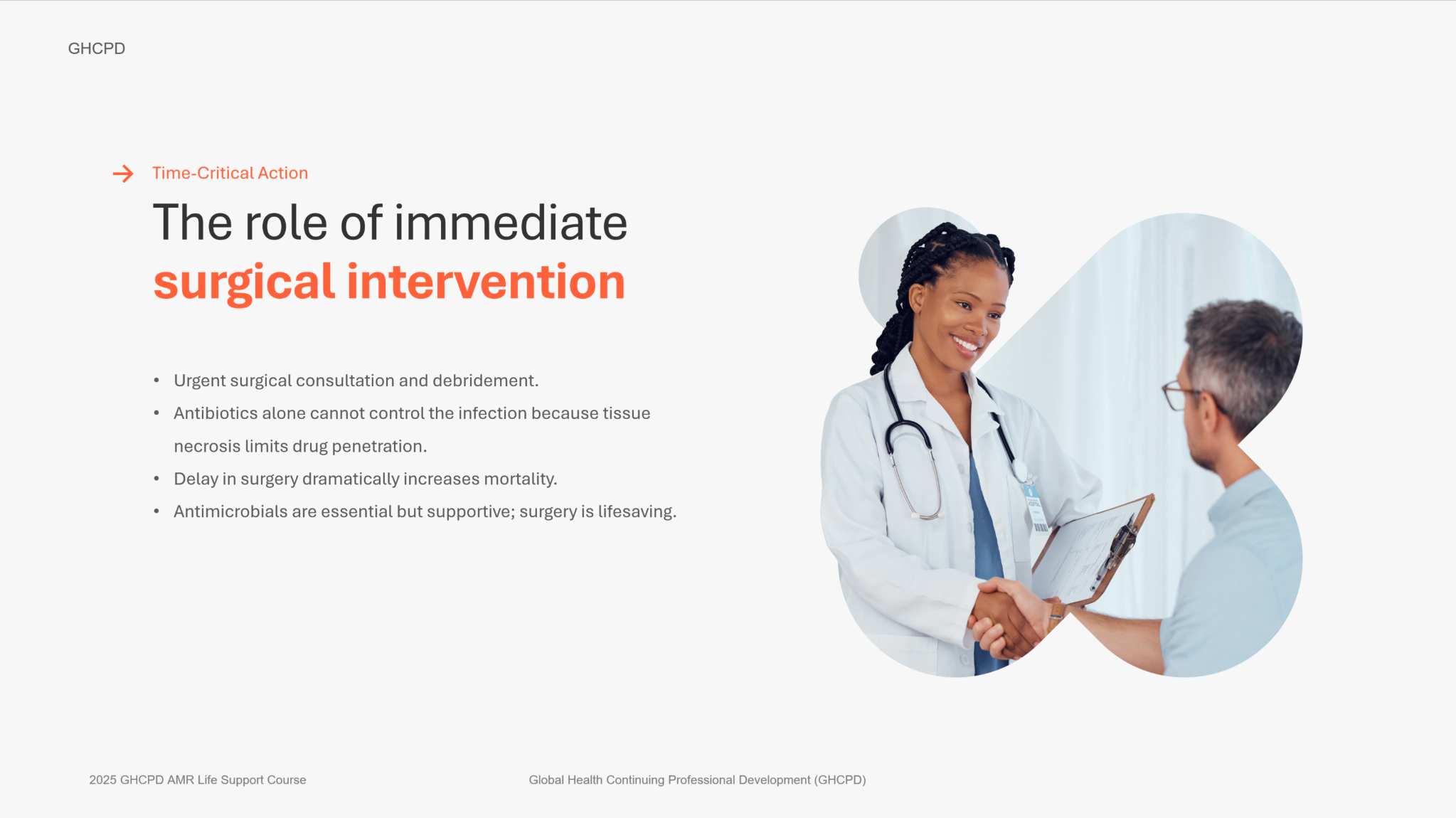
The finished work combined orientation, questions, visual explanation, clinical frameworks, and scenario application. These examples are drawn from a collection of AMR learning projects, including clinical modules and public-health case studies created for the AMR Global Health Academy.
What this project demonstrates
Realistic patient and community situations created relevance and gave learners a reason to interpret information rather than only receive it.
Modules moved from foundational knowledge to evidence, judgment, and action through a repeatable learning rhythm.
Specialized clinical and public-health content became clearer visual explanations without positioning the designer as the subject-matter expert.
Animation and progressive disclosure controlled pacing, highlighted relationships, and prevented dense slides from competing for attention.
The experience centered real professional decisions, existing expertise, practical relevance, and tools learners could connect to their work.
Shared patterns supported a related series of clinical modules, public-health cases, storyboards, visual assets, and multilingual learning materials.
My role
I collaborated with clinical and public-health subject-matter experts. They provided domain expertise; I helped shape how learners would encounter, understand, and apply it.
Result and context
The work transformed dense clinical and public-health material into consistent, learner-centered modules that supported comprehension, reasoning, and practical application across the AMR Global Health Academy.
At the broader program level, the Academy reported 7,907 cumulative learners across 167 countries and 84% multi-course participation by 2026. These figures provide context for the learning ecosystem; they are not presented as outcomes caused by this module alone.
Continue exploring